Ultrasonic Cleaning - Complete Guide
Ultrasonic cleaning using aqueous fluids is one of the most effective methods for final cleaning of precision components. It is gentle yet highly penetrating, making it ideal for intricate parts such as watches, valves, medical instruments and implants, circuit boards, fuel injectors, hydraulic components and more.
Across Australian industries — from mining and resources equipment maintenance, to medical device manufacturing, automotive, defence and electronics — ultrasonic cleaning delivers consistent, repeatable results that manual cleaning simply cannot match. It is particularly valued where internal channels, blind holes, or complex geometries make other cleaning methods impractical.
Ultrasonic action with water and detergents is suitable for most materials. The exception is very soft metals (e.g. pure aluminium) or very thin soft metals, where the cavitation action can dent or erode the surface. If in doubt, request cleaning trials first. For parts contaminated with thick grease, a pre-wash is recommended before final ultrasonic cleaning.
In some instances, burnt-on carbon — for example on cylinder heads or injection moulding/plastic extrusion dies — can be very effectively cleaned with ultrasonic action combined with the correct detergent.
Ultrasonic cleaning is based on 3 parameters:
The Mechanical Effect
How do ultrasonic waves help clean parts?
The Chemical Effect
Why use detergents? Why can't we clean with water alone?
Water Quality
How to choose the best water quality?
How to control all of these parameters?
Process Control
Check all parameters and achieve perfect cleaning.
Tips to Improve Cleaning Efficiency
What can you change to get better results?
The Mechanical Effect — Ultrasonic Cleaning
How are ultrasonic waves produced?
When high frequency sound waves are passed through a cleaning fluid such as water with a suitable detergent additive, many millions of microscopic bubbles form and collapse. These bubbles result from the stretch and compress phases of the sound waves — a process known as cavitation. Micro-bubbles implode under the mechanical action of ultrasonic waves, releasing a large amount of energy and raising local temperature. The bubbles are forced into crevices, allowing fluid to penetrate between the contamination and the workpiece, leaving it completely clean and free of hidden soils.
Ultrasonic Frequencies
25 kHz — The most powerful frequency for removing heavy pollution. Do not use on mirror-polished surfaces or sensitive materials such as glass or aluminium.
40 kHz — Standard frequency compatible with a wide range of materials and suitable for removing most types of pollution.
80 kHz — Used to clean parts with complex geometry. Cavitation bubbles can penetrate small holes to remove contamination.
120 kHz and Megasonic — Primarily used in precision optics to clean very sensitive parts such as wafers. Cavitation power is low, so these are used for final cleaning to remove dust from already-clean parts.
80 kHz and above are available on special request orders only.
Which frequency should I choose?
As a general rule, lower frequencies produce larger, more energetic cavitation bubbles and are best suited to robust parts with heavy contamination. Higher frequencies produce smaller, gentler bubbles that can reach into finer geometries without risking surface damage. Use the guide below as a starting point:
- Heavy soiling, robust parts (e.g. engine components, castings, industrial tooling) — 25–40 kHz
- General precision cleaning (e.g. valves, medical instruments, watch parts, circuit boards) — 40 kHz
- Complex geometry or delicate substrates (e.g. injector nozzles, fine filters, jewellery) — 80 kHz
- Final particle removal on sensitive optics or electronics — 120 kHz / Megasonic
If you are unsure which frequency is right for your application, contact our Australian team to discuss cleaning trials.
Parameters that influence cavitation
- External pressure
- Temperature — heated cleaning liquids reduce cleaning time and help remove dirt faster
- Ultrasound frequency
- Ultrasound power
- Nature, concentration and density of chemicals used

Positioning Parts in the Working Chamber
The efficiency of water-based cleaning processes depends on intimate contact between the cleaning chemistry and the impurities on the surface. The importance of correct positioning is frequently underestimated, particularly for parts with complex geometry.
Correct positioning affects:
- Ultrasonic efficiency (dipping) and pressure jet efficiency (spraying)
- Physical protection from mechanical damage to the surface
- Effectiveness of contact between the substrate and cleaning chemistry
- Effectiveness of the rinsing operation
- Effectiveness of the drying step


The Chemical Effect — Properties of the Water Molecule
Polarity of water
A water molecule is made of oxygen and hydrogen. Because of its intrinsic properties, the water molecule is polar, which means water can dissolve salts — but it is not miscible with non-polar hydrocarbons such as oils and fats.
Surface tension of a liquid
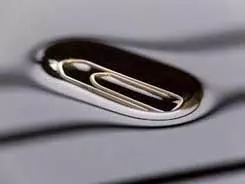
Surface tension arises from intramolecular attraction (Van der Waals forces) due to the polarity of the water molecule. Inside the liquid, these forces balance each other. At the surface, the resultant forces point inward, causing the liquid to contract and its surface to behave like a stretched membrane — allowing, for example, a paper clip to float.
Lotus effect
Because of its high surface tension, natural water maintains a spherical form on surfaces (the lotus effect).
Corrosion — Iron Oxidation
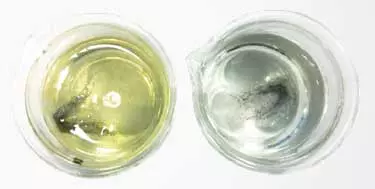
Metallic iron dissolves in water by electron transfer. Dissolved oxygen reacts with water molecules and electrons to form hydroxide ions, which then react with iron ions to form iron hydroxide. This leads to various oxide and hydroxide salt combinations (rust).
Why do we need detergents?
- To decrease the surface tension of water (wetting / wet effect)
- To allow solubilisation of oils and fats in water solution (emulsifying effect)
- To protect against corrosion (via corrosion inhibitors)
Steel wool after 30 minutes in water
The Chemical Effect — How Detergents Work
Degreasing — Nature of Oil and Fat
Fats from plant and animal origin undergo saponification in caustic solution:
- Triglycerides are not soluble in water
- Carboxylate ions and glycerol are water soluble
- Care must be taken with substrate sensitivity to strong alkaline solutions (e.g. tarnishing of copper alloys)
Fats from mineral origin cannot be saponified chemically — a tenside (surfactant) effect is required.
What is a surfactant?
A surfactant is composed of a hydrophobic tail and a hydrophilic head. The length of the hydrophobic tail and the nature of the head determine the ability to form micelles and deliver effective detergency.

How do surfactants work?
Critical Micelle Concentration (CMC): The minimum concentration at which surfactant molecules begin to form micelles. Below the CMC, molecules are free and form monomolecular layers. Above the CMC, they form the monomolecular layer first, then micelles once the surface is fully covered. Additional surfactant forms more micelles but does not further reduce surface tension.
Decrease water surface tension: Surfactants orientate themselves between water molecules and disrupt their cohesion, reducing surface tension to ~30 mN/m or lower.
Emulsify oils: When oil is added to water containing a surfactant, the tail catches oil droplets while the head bonds with water molecules, surrounding and lifting the oil.
Disperse oils into the liquid: Surfactants adsorb onto soil/oil droplets with the hydrophobic group in contact with the oil and the hydrophilic group in contact with water. Repulsion forces between the head groups prevent droplets from coalescing.
Corrosion inhibition: Surfactants form a monomolecular film on the solid surface, providing a hydrophobic barrier against oxidation.
The four families of surfactants
- Anionic — for wettability
- Cationic — for antistatic and antibacterial properties
- Amphoteric — acts anionic or cationic depending on solution pH
- Nonionic — for emulsifying effect
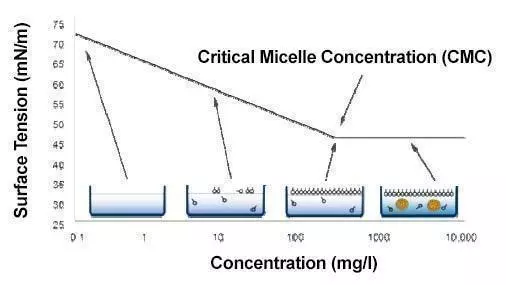

Surfactant effects: global mechanism
Typical Detergent Composition
- Surfactants
- Sequestering agents — inhibit negative calcium and magnesium salt effects
- Solvents
- pH adjustment additives
- Anti-corrosive additives
- Specific additives — preservatives, biocides, antistatic agents, thickeners
- Fillers
Three Parameters that Determine Detergent Properties
The substrate — The product must be compatible with the substrate; its pH and composition must be adapted accordingly.
The pollution — The product must be effective against the specific contamination present.
The surface treatment of the substrate — Consider what treatment will be applied to the parts after cleaning.
Metallic Substrates
| Metal | Behaviour | Observations | |
|---|---|---|---|
| Alkaline medium | Acidic medium | ||
| Stainless Steel | Resistant, except in presence of chlorides | Resistant, except to hydrochloric acid and chlorides | Nitric and phosphoric acid create a passivation layer. Chlorides remove the protective layer. |
| Cast Iron | Resistant | Sensitive to corrosion | Phosphoric acid creates a passivation layer. |
| Copper / Brass / Bronze | Corrosion by colour change | Sensitive to corrosion | Strong etching with nitric acid. More or less sensitive to ammonium salts. |
| Aluminium / Zinc and alloys | Sensitive to corrosion | Resistant | White corrosion and tarnish can appear. |
| Nickel | Resistant | — | — |
| Chrome | Resistant | — | — |
| Titanium alloys | Stains can appear | Acidic medium used as passivation agent | — |
| Gold | Resistant | Resistant | — |
Non-Metallic Substrates
Ceramics — Sensitivity is a function of composition and surface condition.
Mineral glasses (ophthalmic optics) — Resistant to chemical compounds.
Sapphires — Resistant to chemical compounds.
Mineral glasses (precision optics) — Sensitive to alkaline and acidic products and to phosphates.
Organic lenses — CR39, PA, High Index — Low sensitivity.
Organic lenses — Polycarbonates — Sensitive to alkaline products and specific solvents.
Important: Always consider sensitivity to corrosion from pH and conductivity of water, and to sequestering agents that can solubilise elements of the material and create pitting.
One notable example: tungsten carbides bonded with cobalt. The cobalt can be leached rapidly by an aqueous cleaning solution, severely compromising the mechanical properties of the material.
Types of Pollution
Polishing compounds — Animal and vegetable fats used for grinding and polishing, with mineral content.
Oils and emulsions — Mineral and vegetable oils; water-based emulsions.
Protection lacquers — Organic layer applied for mechanical protection during manufacturing.
Oxidation residues — On copper alloys or sensitive steel during manufacturing or storage.
Tumbling residues — Surface finishing residues after mechano-chemical polishing with abrasive stones.
Fingerprints — After the final manufacturing step and before quality control.
Surface Treatment of Substrate
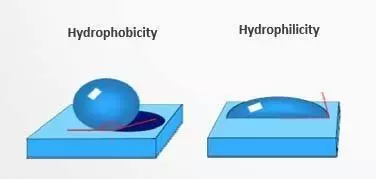
Depending on the next steps after cleaning, the substrate surface must be hydrophilic or hydrophobic. Wettability is evaluated by measuring the contact angle of a water droplet on the surface:
- θ > 90° — non-wetting (hydrophobic) surface
- θ < 90° — partial wetting (hydrophilic) surface
A hydrophilic surface is required for final cleaning to obtain a particle-free surface, for adhesion of polar or hydrophilic coatings, and to aid rinsing.
A hydrophobic surface is required for corrosion protection, antistatic behaviour, adhesion of non-polar or hydrophobic coatings, and to aid drying.
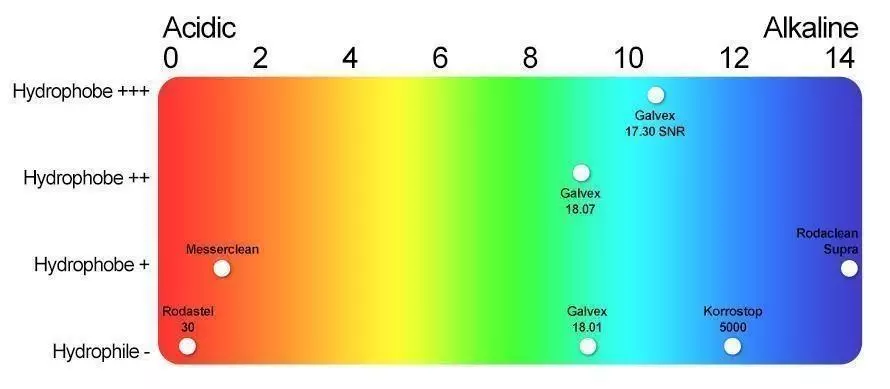
View our full range of ultrasonic cleaning fluids
Water Quality — Rinsing Stages
Typical rinsing steps:
- Tap water rinse for high rinsing effect (tap water has a heterogeneous composition depending on its source)
- DI water for spot-free drying (DI water has a standardised chemical quality)
Water Qualities Compared
Tap Water
- Suitable for preparing cleaning solutions and the first rinsing step where water quality is consistent and no critical surface quality is needed
- Very heterogeneous quality depending on location
- High conductivity up to 600–700 µS/cm
- Often high in calcium and magnesium salts, which leads to salt residues on parts
- May be contaminated with organic matter and chlorine
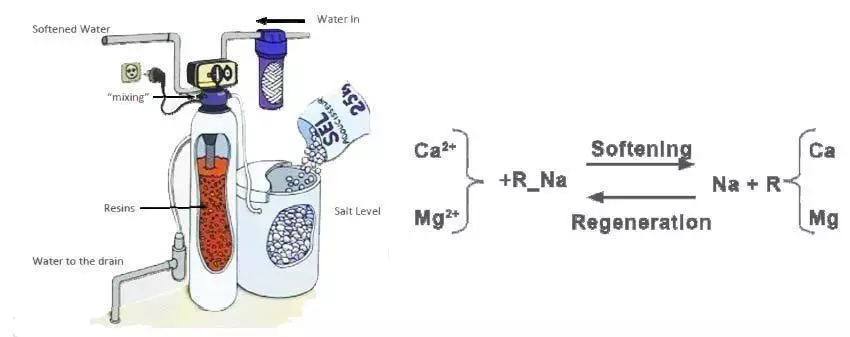
Softened Tap Water
- Used as the first rinsing step where tap water has a very high calcium and magnesium content
- Similar quality and conductivity to the original tap water
- Calcium and magnesium replaced by sodium via ion exchanger
- Inhibits deposition of low-soluble salts
- May be contaminated with bacteria
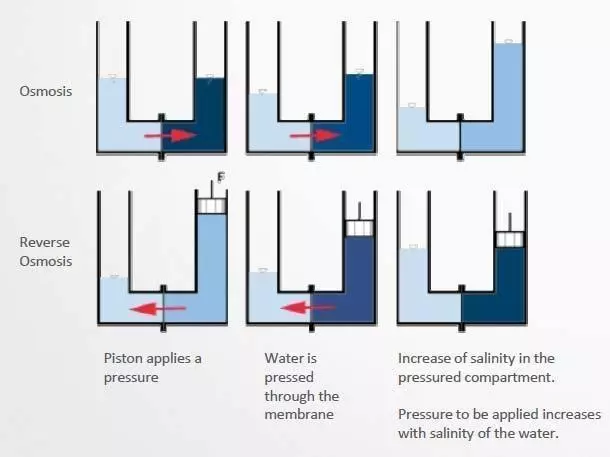
Osmosis Water
- Used when tap water has very high calcium and magnesium content
- Produced by low-porosity membrane filtration
- 90% salt retention; conductivity: 10–20 µS/cm
- Eliminates most organic and bacterial contamination
Demineralised (DI) Water
- Used as the last rinsing step before drying to eliminate residual salts
- Produced and recycled through ion exchangers (mixed bed resins)
- Very low salt content; conductivity: < 0.1 µS/cm
- May be contaminated with organics and bacteria — UV and active charcoal treatment is required
An ion exchanger is an insoluble solid material (small beads) chemically grafted with ionic functions that fix dissolved ionic species.
Cationic exchangers retain cations (e.g. Na⁺); anionic exchangers retain anions (e.g. Cl⁻). A mixed bed combines both.
Water Quality — Microbiology
Bacteria and algae grow in aqueous media (humidity) at temperatures between 20°C and 40°C. They can appear in demineralised water plants and rinsing tanks (slippery tank walls indicate bacterial growth). Important: Bacteria and algae can also appear in cleaning solutions if the product has a neutral pH and is used at low temperatures.
Process Control — Cleaning Solution
The bubble pressure method is used to measure surface tension. A gas stream is pumped into a capillary immersed in fluid. As each bubble grows, its radius decreases until it reaches the capillary radius and begins to form a hemisphere. At this point, pressure is at its maximum. The bubble then bursts and the pressure pattern is evaluated to determine surface tension.
Cleaning Test Equipment
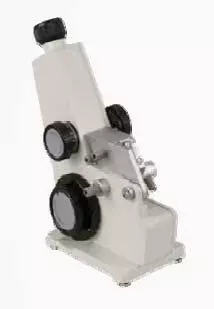
Refraction Index Measurement
Based on the total reflection of an incident beam at the boundary of the sample and glass prisms. For a given compound, the refraction index varies as a function of concentration and temperature. With temperature fixed, a standard curve of refraction index vs. concentration can be established to determine detergent concentration.
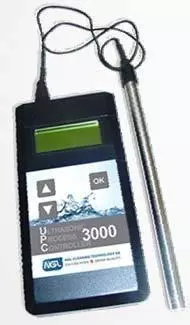
UPC 3000 — Ultrasonic Process Controller
Simple, immediate monitoring of key parameters to ensure cleaning quality:
- Direct measurement of temperature and conductivity
- Monitoring of ultrasonic power variations in the baths
- Quality control of DI water in final rinsing tanks
- Specific configuration based on customer needs
- Simple menu with three-key control
- Measurement of detergent concentration in hard or DI water
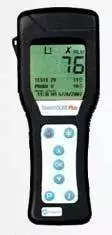
AQUASNAP — Bacteria Detection
- Measures ATP in bacteria
- Each bacterium contains a fixed amount of ATP
- Liquid and reagents are mixed; ATP binds to a reagent (luciferase/luciferin) that emits light
- Amount of light is measured in Relative Light Units (RLU)
- ATP quantity is back-calculated to determine bacterial load
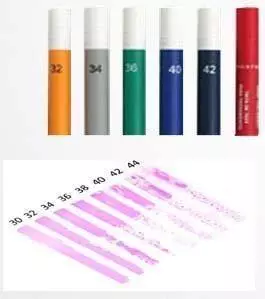
Dyne Test Pens
Dyne pens determine surface tension using inks. This method is well suited to routine checks on production lines — results are immediate and clearly indicate the degree of surface treatment or cleanliness. The marking inks confirm that the surface tension is at least 30–32 mN/m.
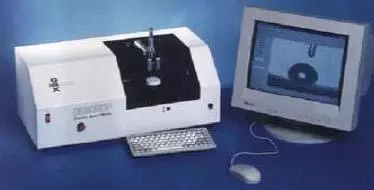
Contact Angle Measurements
To determine surface energy, the contact angle between the surface and a liquid droplet is measured using a photograph of the drop shape on the material. If the liquid is water:
- A large angle indicates a hydrophobic surface
- A small angle indicates a hydrophilic surface
Tips to Improve Cleaning Efficiency
Aqueous processes are 95% water — water quality is fundamental to cleaning performance. Beyond water, the following practical steps can make a significant difference to the consistency and quality of your results.
Optimise Your Temperature
Heated cleaning solutions significantly reduce cleaning time and improve the removal of oils, greases and biological soils. Most aqueous detergents perform best between 40°C and 65°C. However, temperature also affects cavitation intensity — very high temperatures reduce dissolved gas in the liquid, which can actually diminish cavitation. As a starting point, 50°C–60°C is effective for most general cleaning applications. Always check the detergent manufacturer's recommended temperature range for the specific product you are using.
Degas Your Solution
Fresh cleaning solution contains dissolved air, which dampens cavitation and reduces cleaning efficiency. Running the ultrasonic cleaner for 5–10 minutes before loading parts — or using a dedicated degas cycle if your equipment has one — allows dissolved gases to escape and significantly improves cleaning performance. This is especially important when starting up with a fresh bath.
Don't Overload the Tank
Overloading reduces ultrasonic energy reaching each part and limits the circulation of cleaning solution. Parts should be suspended in a basket or rack so that fluid can circulate freely around all surfaces. Avoid stacking parts directly on top of each other, and ensure the load does not exceed approximately 50–60% of the tank's working volume.
Monitor and Refresh Your Bath
As contamination builds up in the cleaning solution, efficiency drops. Monitor conductivity and, where applicable, the refractive index of the bath regularly to track detergent concentration and contamination load. Establish a routine refresh or change schedule based on your process volume rather than waiting for visible deterioration in cleaning quality.
Stabilise Your Water Quality
Filtration Cartridges
- Removes particles with porosity between 5 µm and 20 µm
- Good rinsing effect
- Does not filter dissolved salts — conductivity unchanged before and after
- Does not retain bacteria or chlorine
Softening Device
- Retains dissolved salts
- Similar conductivity before and after filtration
- Reduced rinsing effect (Ca²⁺ and Mg²⁺ replaced by Na⁺)
- Does not retain bacteria or chlorine
Combined Technologies
- Retains particles in suspension (porosity selected to suit application)
- Maintains good rinsing effect
- Retains bacteria and chlorine
For optimal results: Filtration Cartridge + Softening + Nano-filtration may all be required.
Stabilise Your Process
Consistent processes and constant surface quality require control of key parameters:
1. Concentration of Active Tanks
- How to measure and control concentration
- How often to refresh or change the solution
2. Ultrasonic Power in Each Tank
- Are transducers performing efficiently?
- Is ultrasonic power sufficient (check for equipment defects)?
3. Conductivity in Each Active Tank
- Is conductivity within the supplier's specification?
- Correlation between conductivity and pollution levels
4. Conductivity in the DI Water Tank
- Does tank conductivity match the DI unit measurement?
- Is DI water quality sufficient?
Conductivity? Electrical conductivity is the inverse of resistivity. It corresponds to the conductance of a material portion of 1 m in length and 1 m² in cross-section.
Frequently Asked Questions
What is ultrasonic cleaning?
Ultrasonic cleaning is a process that uses high-frequency sound waves passed through a liquid to create millions of microscopic cavitation bubbles. When these bubbles implode, they release concentrated energy that dislodges contamination from the surface and crevices of a part. Combined with a suitable aqueous detergent, it provides thorough, repeatable cleaning for precision components that would be difficult or impossible to clean manually.
What parts can be cleaned ultrasonically?
Ultrasonic cleaning is suitable for a wide range of parts including watches and jewellery, medical instruments and implants, valves and hydraulic components, fuel injectors, circuit boards, optical components, dental instruments, and industrial tooling. Most materials — stainless steel, titanium, brass, glass, ceramics and many plastics — are compatible. Very soft or thin metals such as pure aluminium require care, as cavitation can erode the surface.
How do detergents improve ultrasonic cleaning?
Water alone has high surface tension and cannot penetrate or emulsify oily contamination. Detergents reduce surface tension (improving wetting), emulsify and disperse oils and greases, and provide corrosion protection for the cleaned substrate. Without the correct detergent, ultrasonic cleaning will remove loose particles but will not effectively degrease or clean heavily contaminated parts.
How long does ultrasonic cleaning take?
Cleaning time varies depending on the contamination type, part geometry, frequency, temperature and detergent concentration. Typical cycle times range from 3 to 20 minutes. Lightly soiled parts at optimum temperature with the correct detergent can be cleaned in just a few minutes. Heavily contaminated parts or those with complex internal geometry may require longer cycles or a pre-wash stage.
Can I clean all metals together in the same bath?
It is generally not recommended to mix dissimilar metals in the same cleaning bath, as galvanic reactions can cause corrosion or staining. For example, copper alloys and stainless steel should ideally be cleaned separately. Always select a detergent formulated for the specific metals in your parts and check the substrate compatibility table above before processing mixed loads.
